Introductions to Bronze Koi Fish Sculpture
Bronze koi fish sculpture refers to sculptures of koi fish made of bronze, which are often appreciated for their artistic value and cultural connotations. Here are some relevant introductions:
Cultural Connotations of Koi Fish.
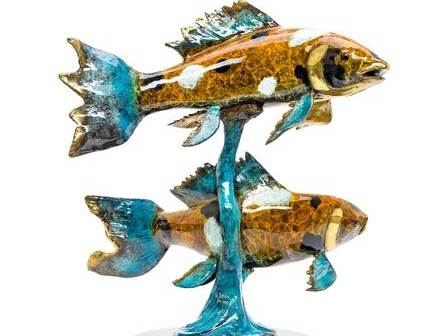
Koi fish, a symbol deeply rooted in Eastern culture, carry a rich tapestry of positive meanings that have transcended borders and become cherished worldwide.
In Chinese culture, the koi is most famously associated with the legend of the Dragon Gate. According to ancient tales, koi fish that swim upstream against the fierce currents of the Yellow River and leap over the Dragon Gate—a mythical waterfall—will transform into mighty dragons. This metaphor has made the koi an enduring symbol of perseverance, ambition, and the triumph of overcoming adversity. It also represents social mobility and success, as the transformation from a common fish to a divine dragon mirrors the journey of an individual rising to a position of great honor or achievement. Additionally, the Chinese word for “koi” (li) sounds similar to the words for “profit” (li) and “strength” (li), further endowing the fish with connotations of wealth, prosperity, and vitality.
In Feng Shui, koi fish are considered powerful auspicious symbols. A group of nine koi fish is particularly lucky—eight red or orange koi and one black koi. The eight colored koi represent prosperity and good fortune, while the black koi is believed to ward off negative energy and protect against misfortune. Placing koi sculptures or paintings in homes or businesses is thought to attract positive chi (energy), promote financial success, and bring harmony to the space.
These profound cultural connotations have made koi fish a popular motif in art, architecture, and decorative items such as bronze sculptures. Whether displayed in a garden, office, or home, a koi fish sculpture serves as a beautiful reminder of the virtues of perseverance, the promise of prosperity, and the pursuit of success.
Types of Bronze Koi Fish Sculptures.
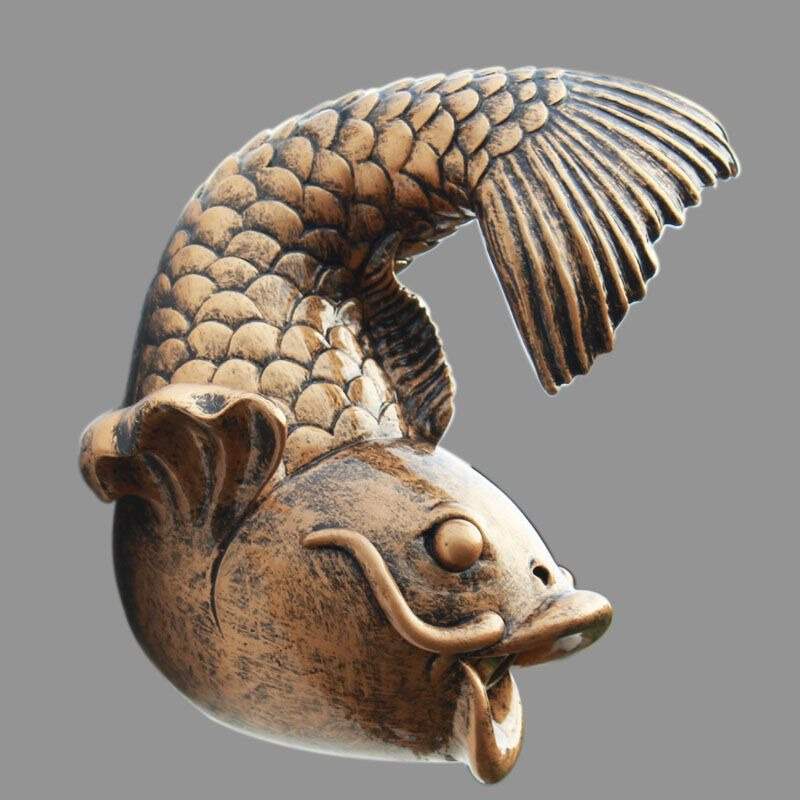
Bronze koi fish sculptures are a beloved decorative art form, valued for their artistic craftsmanship and rich cultural symbolism. They can be classified into several distinct categories based on placement scenario, design style, and functional purpose, each catering to different aesthetic preferences and usage needs.
1. Classification by Placement Scenario
This is the most common classification method, as it directly aligns with the sculpture’s intended display environment.
- Indoor Tabletop SculpturesThese are compact in size, typically ranging from 10 to 30 centimeters in length. Crafted with intricate detailing, they focus on the delicate texture of koi scales and the fluidity of their fins. Designed for placement on desks, bookshelves, mantels, or display cabinets, they serve as elegant decorative accents or personal collectibles. Most feature a solid base (often made of marble, wood, or polished bronze) to ensure stability, and their patina is usually refined and uniform, suitable for indoor lighting conditions.
- Outdoor Garden SculpturesLarger in scale (some exceeding 1 meter in length), these sculptures are engineered to withstand outdoor elements. Made from thicker bronze alloy for enhanced durability, they often feature a more robust, weather-resistant patina. They are commonly placed in garden ponds, lawns, rockeries, or courtyard corners. Some are designed to be partially submerged in water, creating a lifelike scene of koi swimming; others are mounted on stone bases to stand as focal points in outdoor landscapes.
- Public Art InstallationsThese are the largest and most elaborate category, often commissioned for parks, waterfront plazas, or cultural venues. They may consist of multiple bronze koi figures arranged in a dynamic school, symbolizing unity and prosperity. Crafted with high-strength bronze and reinforced internal structures, they are built to endure long-term exposure to wind, rain, and public contact. Their design often integrates with the surrounding architectural or natural environment to convey thematic meanings.
2. Classification by Design Style
The design style of bronze koi fish sculptures reflects different artistic aesthetics and cultural interpretations.
- Realistic StyleThe most popular style, characterized by meticulous attention to anatomical accuracy. Sculptors replicate the natural shape of koi—including the curve of their bodies, the layering of their scales, and the transparency of their fins—with precise detail. The patina is applied to mimic the natural coloration of live koi, such as bright red, orange, white, or black markings, creating a lifelike and vivid appearance that closely resembles real fish.
- Abstract/Modern StyleThis style prioritizes artistic expression over literal representation. Sculptors simplify the form of koi into fluid lines, geometric shapes, or fragmented forms, emphasizing movement and rhythm rather than anatomical detail. For example, a sculpture may depict only the sweeping curve of a koi’s body or a stylized fin, conveying a sense of grace and dynamism through minimalism. The patina for abstract pieces is often bold and experimental, with contrasting colors or uneven textures to enhance the modern aesthetic.
- Culturally Themed StyleRooted in the traditional symbolism of koi fish, these sculptures incorporate cultural elements to reinforce their meaningful connotations. Common designs include koi leaping toward a mythical Dragon Gate (a reference to the Chinese legend of koi transforming into dragons), a school of nine koi (a Feng Shui symbol of good fortune), or koi paired with other auspicious motifs such as lotus flowers (symbolizing purity) or waves (symbolizing abundance). The craftsmanship often draws on traditional bronze-casting techniques, such as the lost-wax method, to preserve cultural heritage.
3. Classification by Functional Purpose
Some bronze koi fish sculptures serve dual roles as both art and functional objects.
- Purely Decorative SculpturesTheir sole purpose is aesthetic appreciation. This category includes most indoor tabletop pieces and outdoor garden sculptures that focus solely on visual appeal and symbolic meaning.
- Functional SculpturesThese integrate practical functions with artistic design. A common example is the bronze koi fountain, where water flows from the fish’s mouth or gills into a basin, creating a soothing auditory and visual experience. Other functional designs may include bronze koi bookends, door knockers, or candle holders, where the koi form is adapted to serve a specific practical use while retaining its cultural symbolism.
Maintenance of Bronze Koi Fish Sculptures
Bronze koi fish sculptures are prized for their durability, intricate detailing, and ability to develop a unique patina over time. Proper maintenance is essential to preserve their aesthetic appeal and structural integrity, whether they are displayed indoors or outdoors. Below is a comprehensive guide to their care:
1. Basic Cleaning (Indoor & Outdoor)
- Regular Dusting: For indoor sculptures, use a soft, lint-free microfiber cloth to gently wipe away dust and surface debris on a monthly basis. Avoid rough fabrics that may scratch the bronze or damage the patina.
- Deep Cleaning: Every 3–6 months, perform a deeper clean. Mix a mild, non-abrasive soap (such as dish soap) with warm distilled water. Dip a soft sponge or cloth into the solution, wring it out thoroughly to avoid excess moisture, and gently clean the sculpture’s surface, paying special attention to crevices in the koi’s scales or fins. Rinse with a damp cloth using distilled water (to prevent mineral deposits from tap water) and dry immediately with a clean, soft towel.
2. Patina Preservation
The patina— a natural, protective layer of oxidation that gives bronze its rich, aged appearance— is a key feature of bronze koi sculptures.
- Avoid Harsh Chemicals: Never use abrasive cleaners, bleach, ammonia, or commercial metal polishes that contain harsh acids. These products can strip the patina, discolor the bronze, and leave permanent damage.
- Specialized Wax Coating: For both indoor and outdoor pieces, apply a thin layer of microcrystalline wax or specialized bronze preservative wax every 6–12 months. This wax seals the patina, repels moisture, and prevents premature oxidation. Apply the wax with a soft cloth in a circular motion, then buff to a subtle shine after it dries.
3. Outdoor Sculpture Care (Key Considerations)
Outdoor bronze koi sculptures face additional challenges from weather, humidity, and environmental pollutants.
- Prevent Corrosion: After heavy rain or snow, wipe the sculpture dry to remove standing water, especially in crevices where moisture can accumulate and cause greenish corrosion (verdigris). While a light layer of verdigris can add character, excessive corrosion can pit the bronze surface.
- Protective Sealant: For sculptures placed in harsh outdoor environments (e.g., coastal areas with salt spray or regions with high pollution), apply a clear, UV-resistant acrylic sealant every 1–2 years. This creates a barrier against salt, acid rain, and UV rays, while still allowing the patina to develop naturally over time.
- Pond Placement Note: If the bronze koi sculpture is submerged in a pond, ensure the water is well-filtered to avoid algae or mineral buildup. Regularly inspect the base of the sculpture for signs of rust or corrosion from contact with pond liners or metal supports.
4. Damage Repair
- Minor Scratches: For small scratches, gently clean the area and reapply a thin layer of preservative wax to protect the exposed bronze from oxidation.
- Excessive Corrosion: If heavy verdigris or pitting occurs, consult a professional bronze restorer. Attempting to remove severe corrosion without expertise can further damage the sculpture and its original patina.
5. General Tips
- Handling: When moving or cleaning the sculpture, lift it by its sturdiest parts (e.g., the base or the body of the koi) rather than delicate fins or tails to avoid bending or breaking.
- Storage: If storing the sculpture long-term, wrap it in acid-free tissue paper and place it in a dry, cool environment to prevent moisture buildup and patina damage.
Bronze koi fish sculptures are a cherished art form that combines exquisite craftsmanship, profound cultural symbolism, and practical decorativeness. As a classic carrier of Eastern cultural connotations, they have gained widespread popularity globally and evolved into diverse categories to meet different usage needs, while requiring proper maintenance to preserve their long-term value.